Flood Damage vs Water Damage: Why Your Homeowners Policy Treats Them Differently

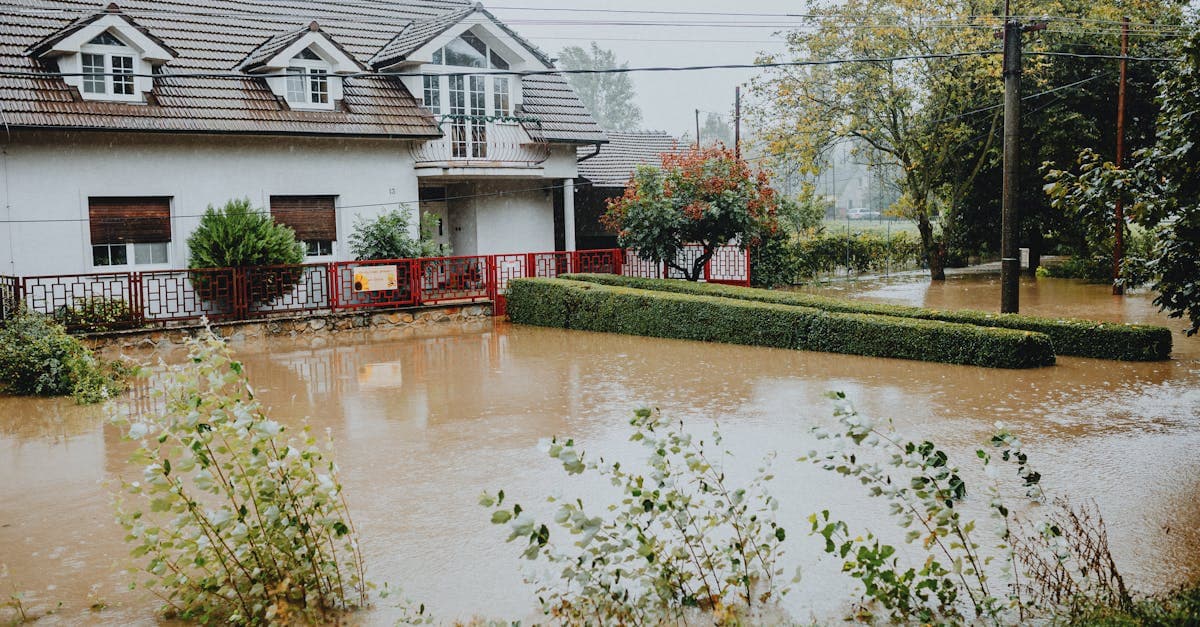
The data on flood damage and homeowners insurance tells a story of massive uninsured exposure. Only about 4 percent of American homeowners carry flood insurance, while nearly 100 percent carry homeowners insurance that explicitly excludes flood damage. This gap leaves the vast majority of homes financially exposed to one of the most common natural disasters.
FEMA estimates that one inch of floodwater in a home causes approximately $25,000 in damage. The average flood insurance claim exceeds $30,000. And floods are far more common than most homeowners realize — over the past five years, all 50 states have experienced flood events, and more than 25 percent of NFIP claims come from outside FEMA-designated high-risk zones.
The financial comparison between insured and uninsured flood victims is stark. Homeowners with flood insurance file a claim, receive a payment averaging over $30,000, and begin rebuilding. Homeowners without flood insurance face the same repair costs but fund them entirely from savings, loans, or deferred repairs. Federal disaster assistance, when available, averages about $5,000 and typically comes as a low-interest SBA loan that must be repaid.
Flood insurance premiums for NFIP policies average $700 to $900 per year nationally, with Preferred Risk Policies for low-risk zones costing as little as $300 to $500. Compare this annual cost against average claim payouts exceeding $30,000 and the mathematical case for separate flood coverage becomes overwhelming.
How Much Does Flood Insurance Cost? A Breakdown for Homeowners
This is where consumers need to pay attention. Understanding flood insurance pricing helps homeowners evaluate whether separate coverage is financially practical — because prescribing the targeted flood coverage that treats the specific exposure your homeowners policy was never formulated to address.
NFIP pricing factors: Under Risk Rating 2.0, NFIP premiums are calculated based on flood frequency, flood types your property faces, distance to the nearest water source, property elevation, replacement cost of the building, and the building's characteristics including foundation type and first floor height.
Preferred Risk Policy pricing: Homes in FEMA moderate and low-risk zones may qualify for the NFIP Preferred Risk Policy with annual premiums ranging from approximately $300 to $600 for combined building and contents coverage. These are among the most affordable insurance products available relative to the protection they provide.
Standard risk pricing: Homes in FEMA high-risk zones pay standard NFIP rates that vary widely based on property-specific factors. Annual premiums can range from $500 to several thousand dollars depending on the property's risk profile.
Private flood insurance pricing: Private flood insurers use their own risk models and may price competitively with or differently from the NFIP. For lower-risk properties, private insurers sometimes offer lower premiums with broader coverage. For higher-risk properties, NFIP rates may be more favorable.
Deductible impact on cost: Choosing a higher deductible reduces your annual premium. An NFIP policy with a $5,000 deductible costs less than the same policy with a $1,000 deductible. The trade-off is higher out-of-pocket costs when filing a claim.
The cost-benefit calculation: Compare your annual premium against the potential cost of flood damage. If your premium is $500 per year and the average flood claim exceeds $30,000, the insurance pays for itself many times over with a single claim. Even 30 years of premiums at $500 total $15,000 — far less than one significant flood event.
Premium trends: FEMA's transition to Risk Rating 2.0 is gradually adjusting premiums to reflect individual property risk. Annual increases are capped at 18 percent for most policyholders, allowing gradual transition to actuarially appropriate rates.
Flood Insurance for Condo Owners and Renters
Your rights matter here. The homeowners insurance flood exclusion also appears in condo and renters insurance policies. Understanding how flood coverage works for these property types ensures that condo owners and renters are not caught without protection.
Condo master flood policies: Your condo association may carry an NFIP or private flood policy on the building structure. This master policy covers the building's common elements and structural components. However, it typically does not cover individual unit improvements or personal property inside your unit.
Individual condo flood coverage: Condo owners can purchase individual NFIP flood policies that cover interior improvements within their unit — built-in fixtures, flooring, cabinets, and appliances you installed — plus personal property. This individual coverage fills the gap between the master policy and your total exposure.
Renters flood insurance: Renters can purchase NFIP contents-only flood policies to protect personal belongings. Renters insurance excludes flood damage just like homeowners insurance, so renters in flood-prone areas need this separate coverage to protect furniture, electronics, clothing, and other possessions.
Coverage coordination: For condo owners, the relationship between the building master flood policy, your individual flood policy, and your condo insurance policy (HO-6) requires careful coordination. Ensure there are no gaps where flood damage to your unit falls between coverages.
Cost for condo and renter policies: Contents-only flood policies for renters and supplemental condo flood policies are generally less expensive than full building and contents policies because they cover a smaller scope. Annual premiums for contents-only coverage may be quite modest.
The key takeaway: Whether you own a house, own a condo, or rent, your standard insurance policy excludes flood damage. The specific flood insurance product varies by ownership type, but the need for separate flood coverage is universal for anyone with flood exposure.
Private Flood Insurance: A Growing Alternative to the NFIP
Your rights matter here. The private flood insurance market has expanded significantly in recent years, giving homeowners an alternative to the NFIP with potentially different coverage features, pricing, and claims handling.
Market growth: Advances in flood modeling technology and data analytics have enabled private insurers to assess and price flood risk at the individual property level. This has attracted new carriers into the flood insurance market, creating competition that benefits consumers.
Coverage advantages: Private flood policies may offer features the NFIP does not, including replacement cost coverage for contents instead of actual cash value, loss of use coverage for temporary living expenses during displacement, building coverage limits above the NFIP $250,000 cap, and broader basement and below-grade coverage.
Pricing differences: For some properties, private flood insurance premiums may be lower than comparable NFIP coverage. For others, particularly high-risk properties, NFIP rates may be lower due to federal subsidies. Comparison shopping between NFIP and private options is essential.
Shorter waiting periods: Some private flood insurers offer waiting periods shorter than the NFIP's 30 days, though this varies by carrier. Shorter waiting periods provide faster access to coverage after purchase.
Financial backing considerations: NFIP policies are backed by the federal government. Private flood policies are backed by the issuing insurance company and its reinsurers. Verify the financial strength rating of any private flood insurer before purchasing — you need confidence the company can pay claims after a widespread flood event.
Mortgage acceptance: Federal law requires lenders to accept private flood insurance that meets certain criteria for properties in high-risk zones. However, some lenders may still prefer NFIP policies. Verify that your lender will accept a private flood policy before switching from the NFIP.
The comparison process: Request quotes from both the NFIP through your agent and at least one private flood insurer. Compare not just premiums but coverage limits, deductibles, covered perils, exclusions, basement coverage, contents valuation method, and claims handling reputation.
Filing a Flood Insurance Claim: What to Expect After Floodwater Recedes
This is where consumers need to pay attention. Knowing how the flood insurance claims process works before you need it ensures faster recovery when flooding actually occurs. Preparation and documentation are the keys to a successful claim.
Immediate steps after flooding: Contact your flood insurance carrier as soon as safely possible — ideally within 24 hours. Document all damage with photographs and video before beginning any cleanup. Separate damaged from undamaged property if possible. Begin water removal and drying to prevent additional damage.
The adjuster inspection: Your insurer will assign an adjuster to inspect the damage. The adjuster will document the extent of flood damage, estimate repair costs, and assess which damages are covered under your policy. Provide access to all affected areas and point out all damage you have identified.
Proof of loss requirement: NFIP policies require a signed proof of loss statement within 60 days of the flood. This document details the specific damage and claimed amounts. Submitting an accurate and complete proof of loss is essential for claim payment.
What to save for documentation: Keep damaged items until the adjuster has seen them. Maintain receipts for any emergency repairs, cleaning supplies, or temporary accommodations. Save before and after photographs. Keep a detailed log of all conversations with your insurer, adjuster, and contractors.
Advance payments: NFIP policies may allow advance payments on undisputed portions of a claim while the full claim is being processed. This provides initial funds for emergency repairs and essential recovery expenses without waiting for the complete claim settlement.
Claim disputes: If you disagree with the adjuster's damage assessment or claim payment, you have options. You can request a re-inspection, provide independent repair estimates, or invoke the policy's appraisal process. For NFIP policies, litigation must be filed within one year of the insurer's written denial.
The timeline: Flood insurance claims typically take 30 to 90 days to settle, depending on the complexity of the damage and the scale of the flood event. During widespread flooding, adjuster availability and processing times may extend beyond normal timelines.
Private Flood Insurance: A Growing Alternative to the NFIP
Your rights matter here. The private flood insurance market has expanded significantly in recent years, giving homeowners an alternative to the NFIP with potentially different coverage features, pricing, and claims handling.
Market growth: Advances in flood modeling technology and data analytics have enabled private insurers to assess and price flood risk at the individual property level. This has attracted new carriers into the flood insurance market, creating competition that benefits consumers.
Coverage advantages: Private flood policies may offer features the NFIP does not, including replacement cost coverage for contents instead of actual cash value, loss of use coverage for temporary living expenses during displacement, building coverage limits above the NFIP $250,000 cap, and broader basement and below-grade coverage.
Pricing differences: For some properties, private flood insurance premiums may be lower than comparable NFIP coverage. For others, particularly high-risk properties, NFIP rates may be lower due to federal subsidies. Comparison shopping between NFIP and private options is essential.
Shorter waiting periods: Some private flood insurers offer waiting periods shorter than the NFIP's 30 days, though this varies by carrier. Shorter waiting periods provide faster access to coverage after purchase.
Financial backing considerations: NFIP policies are backed by the federal government. Private flood policies are backed by the issuing insurance company and its reinsurers. Verify the financial strength rating of any private flood insurer before purchasing — you need confidence the company can pay claims after a widespread flood event.
Mortgage acceptance: Federal law requires lenders to accept private flood insurance that meets certain criteria for properties in high-risk zones. However, some lenders may still prefer NFIP policies. Verify that your lender will accept a private flood policy before switching from the NFIP.
The comparison process: Request quotes from both the NFIP through your agent and at least one private flood insurer. Compare not just premiums but coverage limits, deductibles, covered perils, exclusions, basement coverage, contents valuation method, and claims handling reputation.
Filing a Flood Insurance Claim: What to Expect After Floodwater Recedes
This is where consumers need to pay attention. Knowing how the flood insurance claims process works before you need it ensures faster recovery when flooding actually occurs. Preparation and documentation are the keys to a successful claim.
Immediate steps after flooding: Contact your flood insurance carrier as soon as safely possible — ideally within 24 hours. Document all damage with photographs and video before beginning any cleanup. Separate damaged from undamaged property if possible. Begin water removal and drying to prevent additional damage.
The adjuster inspection: Your insurer will assign an adjuster to inspect the damage. The adjuster will document the extent of flood damage, estimate repair costs, and assess which damages are covered under your policy. Provide access to all affected areas and point out all damage you have identified.
Proof of loss requirement: NFIP policies require a signed proof of loss statement within 60 days of the flood. This document details the specific damage and claimed amounts. Submitting an accurate and complete proof of loss is essential for claim payment.
What to save for documentation: Keep damaged items until the adjuster has seen them. Maintain receipts for any emergency repairs, cleaning supplies, or temporary accommodations. Save before and after photographs. Keep a detailed log of all conversations with your insurer, adjuster, and contractors.
Advance payments: NFIP policies may allow advance payments on undisputed portions of a claim while the full claim is being processed. This provides initial funds for emergency repairs and essential recovery expenses without waiting for the complete claim settlement.
Claim disputes: If you disagree with the adjuster's damage assessment or claim payment, you have options. You can request a re-inspection, provide independent repair estimates, or invoke the policy's appraisal process. For NFIP policies, litigation must be filed within one year of the insurer's written denial.
The timeline: Flood insurance claims typically take 30 to 90 days to settle, depending on the complexity of the damage and the scale of the flood event. During widespread flooding, adjuster availability and processing times may extend beyond normal timelines.
The Flood Exclusion in Your Homeowners Policy: What It Says and What It Means
This is where consumers need to pay attention. Every standard homeowners insurance policy contains language that excludes coverage for flood damage. Understanding exactly what this exclusion says helps you grasp the scope of what is not covered — because the undiagnosed vulnerability in your insurance health that becomes a full-blown financial crisis the moment floodwater enters your home.
The standard exclusion language: Your policy excludes damage caused by flood, typically defined as a general and temporary condition of partial or complete inundation of normally dry land areas from overflow of inland or tidal waters, unusual and rapid accumulation or runoff of surface waters from any source, or mudflow.
What triggers the exclusion: Any water that enters your home from outside as rising water activates the flood exclusion. This includes river overflow, storm surge, surface runoff from heavy rain, water that flows overland from any source, and mudflow — a river of liquid mud on the surface.
What the exclusion does not affect: Internal water damage from burst pipes, failed appliances, accidental overflows, and ice dam backup is generally covered under your homeowners policy. The critical distinction is the source: internal and accidental water events are covered; external rising water is excluded.
The universality of the exclusion: This exclusion appears in every standard homeowners policy form — HO-3, HO-5, HO-6, and others. No standard homeowners policy from any major insurer covers flood damage. The exclusion is industry-wide and has been standard for over 50 years.
The gray areas: Wind-driven rain that enters through storm damage to the roof or walls may be covered as wind damage. But once water rises from the ground and enters through doors, windows, or foundations, the flood exclusion applies regardless of what caused the water to rise.
The practical impact: When you file a claim for flood damage on your homeowners policy, the claim will be denied. The adjuster will document the damage, confirm it resulted from flooding as defined in the policy, and inform you that the exclusion applies. There is no appeal process that overrides the exclusion language.
Basement Flooding: The Coverage Gap Within the Coverage Gap
Your rights matter here. Basement flooding represents a unique challenge because even flood insurance provides limited coverage for below-grade spaces. Understanding what is and is not covered in basements helps homeowners plan their protection strategy.
Homeowners insurance and basements: Your homeowners policy covers internal water damage in basements from burst pipes and appliance failures but excludes all flood damage below grade. A basement pipe burst is covered. Floodwater entering through foundation walls is not.
NFIP basement coverage limits: NFIP policies provide limited coverage for below-grade areas. Covered items include foundation walls, sump pumps, electrical outlets and switches on circuits, central air conditioning units, furnaces, water heaters, fuel tanks, and essential equipment. Finished improvements like drywall, paneling, carpet, and tile flooring below the lowest elevated floor are excluded.
The finished basement problem: If you have invested $30,000 to $50,000 in a finished basement with carpeting, drywall, built-in entertainment systems, and a kitchen — none of those improvements are covered by the NFIP flood policy. This creates a significant coverage gap for homeowners with below-grade living spaces.
Private flood insurance for basements: Some private flood insurers offer broader basement coverage than the NFIP, including coverage for finished improvements below grade. If you have a valuable finished basement, a private flood policy with basement coverage may provide substantially better protection.
Sewer backup coverage for basements: A sewer backup endorsement on your homeowners policy covers water that enters the basement through drains and sewer connections. This coverage may protect finished basement improvements that flood insurance does not cover, but only for water entering through the plumbing system.
The comprehensive basement strategy: Protecting a finished basement from water damage may require three coverages: flood insurance for structural elements and equipment, a sewer backup endorsement for drain-related water intrusion, and potentially a private flood policy with basement improvement coverage. No single policy covers all basement water damage scenarios.
What the Numbers Say About Flood Risk and Insurance
The data makes a compelling case for separate flood coverage. Only about 4 percent of American homeowners carry flood insurance. Floods are the most common natural disaster. Average flood damage costs $25,000 to $50,000. And homeowners insurance covers none of it.
The probability of flooding over a 30-year mortgage is meaningful even in moderate-risk zones — roughly 26 percent. That probability exceeds the risk of fire, yet virtually every homeowner carries fire insurance without question. The asymmetry between fire coverage and flood coverage is driven by inclusion and exclusion decisions in the homeowners policy, not by relative risk.
The financial comparison between insured and uninsured flood victims is dramatic. Insured homeowners file claims averaging over $30,000 and rebuild. Uninsured homeowners face the same costs from savings, debt, or deferred repairs. Federal assistance averages $5,000 and is usually a loan.
For the mathematically inclined: annual flood insurance premiums of $500 over 30 years total $15,000 in cumulative cost. One flood event costing $35,000 produces a positive return on 30 years of premiums in a single claim. The expected value calculation overwhelmingly favors carrying coverage.
Continue reading

The Apples-to-Apples Guide to Comparing Insurance Quotes
Insurance quotes vary widely because they cover different things in different ways. Making an accurate comparison requires matching coverage limits, deductibles, and endorsements before looking at price.

Life Events That Should Trigger an Immediate Policy Review
Marriage, a new baby, a home purchase, retirement, and other major life events change your insurance needs overnight. Knowing which events require immediate review prevents dangerous coverage gaps.

How Assignment of Benefits Works in Homeowners Insurance Claims
When you sign an AOB, your contractor deals directly with your insurer and can even sue on your behalf. Learn how this process works and what it means for your homeowners claim.