Flood Insurance Outside High-Risk Zones: The Numbers That Change Minds

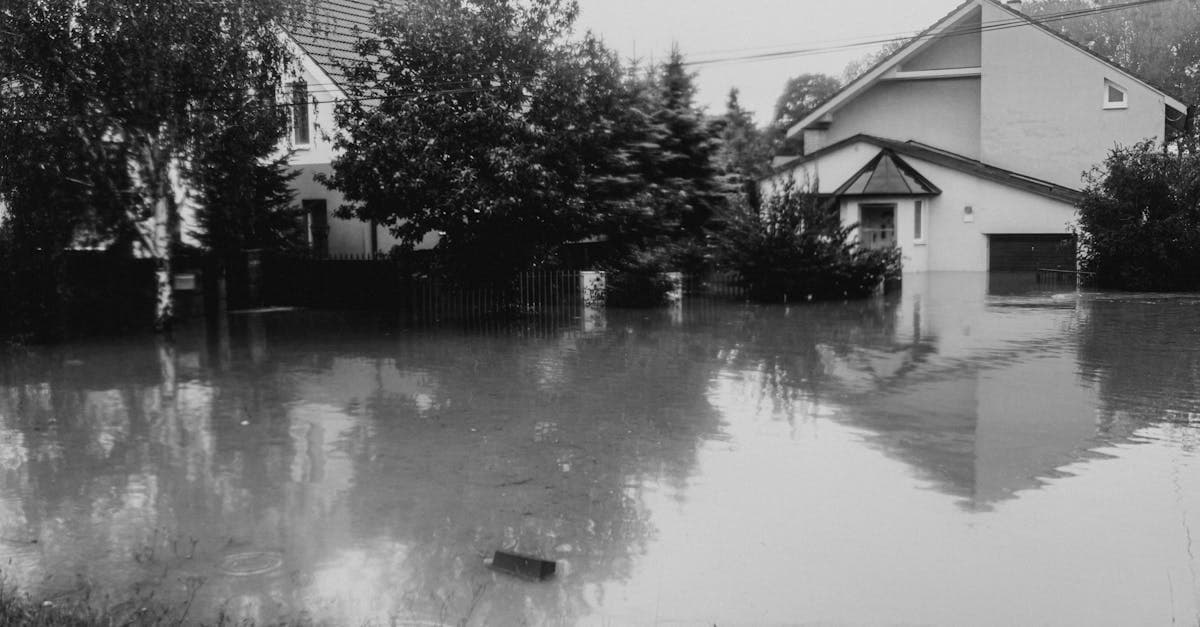
The statistics on flooding outside high-risk zones tell a compelling story that every homeowner should understand. According to FEMA, more than 25 percent of all NFIP flood insurance claims come from properties in moderate and low-risk flood areas. One-third of federal disaster assistance for flooding goes to properties outside high-risk zones.
The average flood claim costs between $25,000 and $50,000. FEMA estimates that just one inch of water in a home causes approximately $25,000 in damage. And the average annual flood insurance premium for homes in moderate and low-risk zones through the NFIP Preferred Risk Policy can be as low as $300 to $600 per year — a fraction of what high-risk zone homeowners pay.
Over a 30-year mortgage period, a home in a moderate-risk zone has a roughly 26 percent chance of experiencing a flood — compared to the 1 percent chance of fire that most homeowners insure against without question. The probability of flooding over the life of a mortgage is meaningful even outside high-risk zones.
These numbers reveal a clear risk-reward calculation. A few hundred dollars per year in premiums protects against potential losses measured in tens of thousands. The homes that file flood claims outside high-risk zones do not get a refund because their FEMA map said the risk was low — they get a claim payment because they had the foresight to purchase coverage voluntarily.
Why Your Homeowners Insurance Does Not Cover Flood Damage
This is where consumers need to pay attention. Understanding the flood exclusion in your homeowners insurance policy is essential because many homeowners discover it only after filing a claim — and by then it is too late. This exclusion is absolute and applies regardless of your flood zone designation.
The standard flood exclusion: Every standard homeowners insurance policy — HO-3, HO-5, and all common policy forms — contains a clear exclusion for flood damage. Flood is typically defined as a general and temporary condition of partial or complete inundation of normally dry land areas from overflow of inland or tidal waters, unusual and rapid accumulation or runoff of surface waters from any source, or mudflow.
What the exclusion means in practice: If floodwater enters your home through the front door, seeps through foundation walls, or rises from the ground up, your homeowners insurance pays nothing for the resulting damage. The structural damage, contents damage, and cleanup costs are entirely your responsibility without flood insurance.
Water damage that IS covered: Your homeowners policy does cover water damage from sudden internal events — a burst pipe, a failed water heater, an accidental overflow from a bathtub or washing machine. The distinction is the source: internal and accidental water damage is covered; external flooding is excluded.
The gray area with storm damage: Wind-driven rain that enters through openings created by storm damage — broken windows, missing shingles — may be covered under your homeowners policy as wind damage, not flood damage. But once water rises from the ground or flows in at ground level, the flood exclusion applies.
Sewer backup is separate too: Water that backs up through sewer drains or sump pump failures may be covered if you have a sewer backup endorsement on your homeowners policy. But this coverage is separate from flood insurance and covers a different water source with different policy terms and limits.
The practical takeaway: No amount of homeowners insurance protects you against flood damage. The only coverage that responds to rising water, surface runoff, and overflowing waterways is a standalone flood insurance policy — either through the NFIP or a private flood insurer.
Making the Decision: Is Flood Insurance Worth It for Your Home?
Your rights matter here. Deciding whether to purchase flood insurance outside a high-risk zone is a personal financial decision that depends on your specific situation. This framework helps you evaluate the decision systematically — because diagnosing your true flood exposure and prescribing appropriate coverage before symptoms become a financial emergency.
Assess your actual risk: Look beyond your FEMA designation. Research local flood history. Check whether nearby properties have flooded. Evaluate your lot's drainage, elevation, and relationship to surrounding terrain. Consider recent development that may have changed water flow patterns.
Calculate your exposure: Estimate the potential cost of flood damage to your home. Consider the value of your ground-floor finishes, basement improvements, mechanical systems, and personal property. Even conservative estimates typically produce exposure figures of $20,000 to $50,000 or more.
Compare costs and benefits: A Preferred Risk Policy might cost $300 to $600 per year. Over 10 years, that is $3,000 to $6,000 in total premiums. One significant flood event costs $25,000 to $75,000 or more. The insurance pays for itself many times over with a single claim.
Consider your financial resilience: Could you absorb $25,000 to $50,000 in unexpected repair costs? Would that amount force you to deplete emergency savings, take on debt, or defer critical repairs? Homeowners with less financial cushion benefit most from the protection flood insurance provides.
Factor in the waiting period: NFIP policies have a 30-day waiting period. You cannot purchase flood insurance when a storm is approaching or after flooding begins. The decision to buy must be made proactively, during calm weather, well before any flood threat materializes.
Weigh peace of mind: Beyond the financial calculation, flood insurance provides certainty that a flooding event — however unlikely — will not create a financial crisis. For homeowners who value peace of mind and proactive risk management, the modest premium delivers significant psychological value.
Private Flood Insurance: An Alternative to the NFIP for Low-Risk Homes
Your rights matter here. The private flood insurance market has expanded significantly in recent years, offering homeowners outside high-risk zones an alternative to the NFIP with potentially different coverage features, pricing, and claims handling.
Growing availability: Private flood insurers have entered the market in increasing numbers as data analytics and catastrophe modeling have improved their ability to assess and price flood risk at the individual property level. Many now compete aggressively for lower-risk properties.
Potential coverage advantages: Private flood policies may offer coverage features not available through the NFIP, including replacement cost coverage for contents, loss of use coverage during displacement, higher building coverage limits above the NFIP $250,000 cap, and coverage for basement improvements.
Pricing competition: For properties outside high-risk zones, private flood insurers may offer premiums competitive with or lower than NFIP Preferred Risk Policies. The competitive market benefits consumers by driving innovation in coverage and pricing.
Faster claims processing: Some private flood insurers market faster claims processing and payment timelines compared to the NFIP. For homeowners prioritizing rapid recovery after a flood, this can be a significant differentiator.
Important considerations: Private flood policies are backed by the issuing insurance company, not the federal government. Verify the insurer's financial strength rating and claims-paying history. Also review policy terms carefully — private policies may have different definitions of flooding, different exclusions, and different coverage structures than NFIP policies.
Comparing options: Request quotes from both the NFIP and one or more private flood insurers. Compare not just premiums but coverage limits, deductibles, covered perils, exclusions, and claims handling reputation. The best option depends on your specific property, coverage needs, and risk tolerance.
Sewer Backup vs Flood Insurance: Understanding the Coverage Distinction
This is where consumers need to pay attention. Homeowners outside high-risk zones often experience water damage from two distinct sources that require two different insurance products. Understanding the difference between sewer backup coverage and flood insurance prevents coverage gaps and claim denials.
Sewer backup coverage defined: Sewer backup coverage is an endorsement added to your homeowners insurance policy. It covers water damage caused by water or sewage that backs up through sewer drains, floor drains, or sump pump systems into your home. This is internal water entering through your home's plumbing and drainage connections.
Flood insurance defined: Flood insurance covers damage from rising water that enters your home from outside — surface water runoff, overflowing rivers or streams, storm surge, or any external water that inundates normally dry land. This is external water entering through doors, windows, walls, or foundations.
Why both may be needed: During heavy rainfall, both events can occur simultaneously. Storm drains in the street overflow, sending surface water toward your home as a flood event. At the same time, the municipal sewer system backs up, sending water into your basement through floor drains. Sewer backup coverage handles the drain water. Flood insurance handles the surface water.
Coverage limits differ: Sewer backup endorsements on homeowners policies typically have coverage limits of $5,000 to $25,000. Flood insurance offers building coverage up to $250,000 through the NFIP. The coverage limits reflect the typically different scope of damage from each source.
Claim adjuster determination: When both sewer backup and surface flooding occur simultaneously, the claim adjuster must determine what portion of damage was caused by each source. This determination affects which policy pays for which damages. Having both coverages in place avoids disputes about which source caused what damage.
Cost comparison: Sewer backup endorsements typically cost $40 to $160 per year added to your homeowners policy. Flood insurance for low-risk zones costs $300 to $700 per year. Together, for approximately $500 to $850 annually, you can have comprehensive water damage protection from both internal backup and external flooding.
Private Flood Insurance: An Alternative to the NFIP for Low-Risk Homes
Your rights matter here. The private flood insurance market has expanded significantly in recent years, offering homeowners outside high-risk zones an alternative to the NFIP with potentially different coverage features, pricing, and claims handling.
Growing availability: Private flood insurers have entered the market in increasing numbers as data analytics and catastrophe modeling have improved their ability to assess and price flood risk at the individual property level. Many now compete aggressively for lower-risk properties.
Potential coverage advantages: Private flood policies may offer coverage features not available through the NFIP, including replacement cost coverage for contents, loss of use coverage during displacement, higher building coverage limits above the NFIP $250,000 cap, and coverage for basement improvements.
Pricing competition: For properties outside high-risk zones, private flood insurers may offer premiums competitive with or lower than NFIP Preferred Risk Policies. The competitive market benefits consumers by driving innovation in coverage and pricing.
Faster claims processing: Some private flood insurers market faster claims processing and payment timelines compared to the NFIP. For homeowners prioritizing rapid recovery after a flood, this can be a significant differentiator.
Important considerations: Private flood policies are backed by the issuing insurance company, not the federal government. Verify the insurer's financial strength rating and claims-paying history. Also review policy terms carefully — private policies may have different definitions of flooding, different exclusions, and different coverage structures than NFIP policies.
Comparing options: Request quotes from both the NFIP and one or more private flood insurers. Compare not just premiums but coverage limits, deductibles, covered perils, exclusions, and claims handling reputation. The best option depends on your specific property, coverage needs, and risk tolerance.
Sewer Backup vs Flood Insurance: Understanding the Coverage Distinction
This is where consumers need to pay attention. Homeowners outside high-risk zones often experience water damage from two distinct sources that require two different insurance products. Understanding the difference between sewer backup coverage and flood insurance prevents coverage gaps and claim denials.
Sewer backup coverage defined: Sewer backup coverage is an endorsement added to your homeowners insurance policy. It covers water damage caused by water or sewage that backs up through sewer drains, floor drains, or sump pump systems into your home. This is internal water entering through your home's plumbing and drainage connections.
Flood insurance defined: Flood insurance covers damage from rising water that enters your home from outside — surface water runoff, overflowing rivers or streams, storm surge, or any external water that inundates normally dry land. This is external water entering through doors, windows, walls, or foundations.
Why both may be needed: During heavy rainfall, both events can occur simultaneously. Storm drains in the street overflow, sending surface water toward your home as a flood event. At the same time, the municipal sewer system backs up, sending water into your basement through floor drains. Sewer backup coverage handles the drain water. Flood insurance handles the surface water.
Coverage limits differ: Sewer backup endorsements on homeowners policies typically have coverage limits of $5,000 to $25,000. Flood insurance offers building coverage up to $250,000 through the NFIP. The coverage limits reflect the typically different scope of damage from each source.
Claim adjuster determination: When both sewer backup and surface flooding occur simultaneously, the claim adjuster must determine what portion of damage was caused by each source. This determination affects which policy pays for which damages. Having both coverages in place avoids disputes about which source caused what damage.
Cost comparison: Sewer backup endorsements typically cost $40 to $160 per year added to your homeowners policy. Flood insurance for low-risk zones costs $300 to $700 per year. Together, for approximately $500 to $850 annually, you can have comprehensive water damage protection from both internal backup and external flooding.
The Reality of Flood Risk Outside High-Risk Zones
This is where consumers need to pay attention. Understanding flood risk outside high-risk zones starts with the preventive screening you get even when you feel healthy because early detection prevents catastrophic outcomes. FEMA classifies flood zones based on the annual probability of flooding, but probability is not destiny — and lower probability does not mean no exposure.
Zone X and what it means: Zone X on FEMA flood maps encompasses both moderate-risk and minimal-risk areas. Shaded Zone X indicates a 0.2 percent annual chance of flooding — roughly a 6 percent chance over a 30-year mortgage. Unshaded Zone X indicates even lower probability, but the risk is not zero.
Why low-probability events matter: A 0.2 percent annual probability may sound negligible, but over 30 years of homeownership, probabilities accumulate. And when flooding does occur, the damage costs are the same regardless of the probability — a flooded home is a flooded home whether it sits in Zone A or Zone X.
Sources of flooding outside floodplains: Heavy rainfall that overwhelms drainage systems creates flooding in any location. Flash floods from intense storms strike without regard for flood zones. Urban runoff from impervious surfaces pools in areas with poor drainage. And groundwater rising from saturated soil can flood basements far from any surface water.
The changing risk landscape: Climate change is shifting precipitation patterns, intensifying storms, and creating flooding in areas with no flood history. FEMA maps updated on 10 to 20-year cycles cannot keep pace with these changes, meaning your current designation may understate your actual risk.
Development impacts: New construction, road building, and land clearing near your property can redirect water flow and increase the volume and speed of runoff. What was once a well-drained area can become flood-prone after upstream development changes the water equation.
What Flood Damage Actually Costs: The Financial Impact Without Insurance
Your rights matter here. Understanding the financial scope of flood damage helps homeowners outside high-risk zones evaluate whether the cost of flood insurance is justified. The numbers consistently show that even minor flooding events create major expenses.
The one-inch rule: FEMA estimates that just one inch of water in a home causes approximately $25,000 in damage. This includes flooring replacement, drywall repair or replacement up to the water line, baseboard and trim replacement, electrical outlet replacement, and professional drying and sanitization.
Moderate flooding costs: Three to six inches of water in a home typically causes $30,000 to $60,000 in damage. At this depth, damage extends higher on walls, affects more fixtures, and may damage lower kitchen cabinets, HVAC systems at ground level, and stored belongings.
Significant flooding costs: Twelve inches or more of water can cause $50,000 to $100,000 or more in damage. At this depth, entire ground floor finishes are destroyed, most appliances are damaged, and structural components like insulation and subflooring are compromised.
Basement flooding costs: Finished basement flooding is particularly expensive because it affects the entire finished space — flooring, drywall, built-in features, entertainment systems, and mechanical equipment. Professional basement flood restoration typically costs $10,000 to $50,000 depending on the finish level and flood depth.
Hidden costs: Beyond visible damage, flooding creates hidden costs including mold remediation, extended drying with commercial equipment, temporary displacement, increased utility costs, and the time and stress of managing repairs. These costs add 20 to 40 percent beyond the direct physical damage estimates.
Federal disaster assistance reality: Many homeowners expect federal assistance after flooding. In reality, disaster assistance is only available when a presidential disaster declaration is issued, averages approximately $5,000, typically comes as a low-interest SBA loan that must be repaid, and takes weeks or months to process. It is not a substitute for insurance.
What the Data Says About Flood Insurance Outside High-Risk Zones
The numbers make a compelling case for voluntary flood insurance. Over 25 percent of NFIP claims come from moderate and low-risk zones. One inch of water causes $25,000 in damage. Average flood damage ranges from $25,000 to $50,000 or more. And Preferred Risk Policies cost as little as $300 to $600 per year.
The probability calculation reinforces the case. Over a 30-year mortgage, a moderate-risk property has roughly a 26 percent chance of flooding. That probability is higher than the risk of fire — yet every homeowner carries fire insurance without question.
The cost-benefit ratio is exceptionally favorable. Even if you pay premiums for 30 years and never file a claim, the total cost of $9,000 to $18,000 is far less than the cost of a single flood event. And if you do file a claim, the return on your premium investment is immediate and substantial.
Data-driven homeowners base insurance decisions on expected outcomes, not on the hope that nothing bad will happen. The expected cost of carrying flood insurance over a lifetime of homeownership is modest. The expected cost of flood damage without insurance is not.
Continue reading

The Apples-to-Apples Guide to Comparing Insurance Quotes
Insurance quotes vary widely because they cover different things in different ways. Making an accurate comparison requires matching coverage limits, deductibles, and endorsements before looking at price.

Life Events That Should Trigger an Immediate Policy Review
Marriage, a new baby, a home purchase, retirement, and other major life events change your insurance needs overnight. Knowing which events require immediate review prevents dangerous coverage gaps.

How Assignment of Benefits Works in Homeowners Insurance Claims
When you sign an AOB, your contractor deals directly with your insurer and can even sue on your behalf. Learn how this process works and what it means for your homeowners claim.